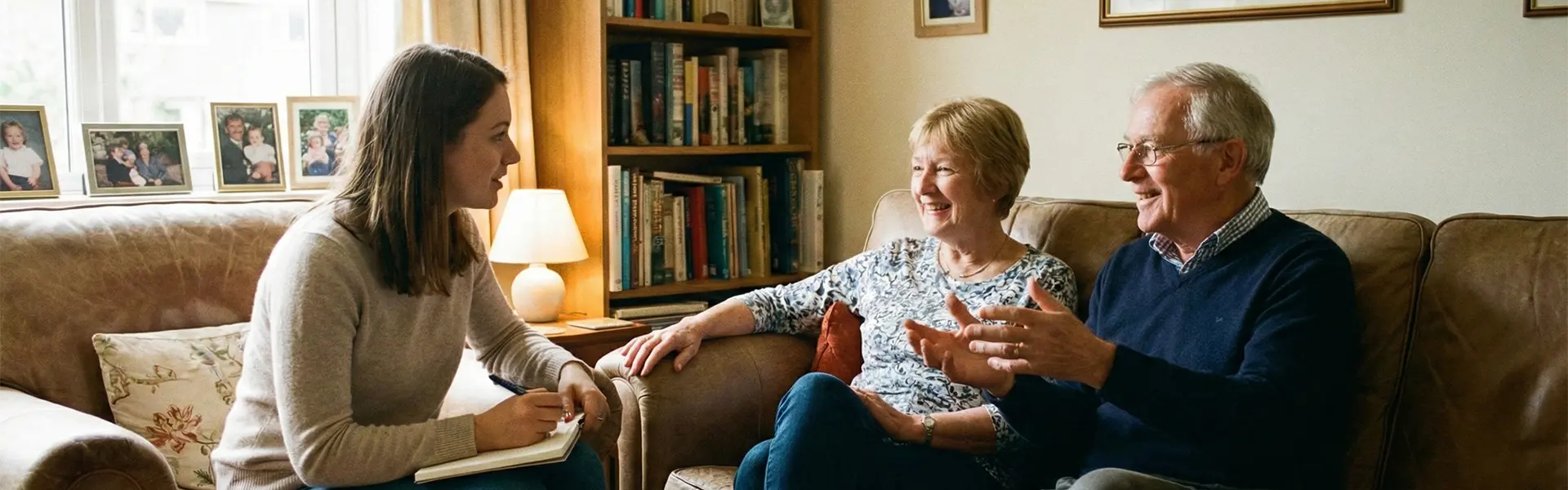
Why These Conversations Matter More Than You Think
Most of us only know our parents in the role of Mom or Dad. And even after decades of knowing them that way, it's common for something to hit you: you don't actually know who they were before that. Who they were at twenty, what high school was like, and how they spent their summers as a kid.
We usually assume there will be time to ask, and often end up waiting until it's too late.
But asking these questions will help you understand them as people, not just as parents. And more often than not, having these conversations will help you understand yourself a little better too.
The following guide gives you dozens of questions to ask, and then teaches you how to ensure their memories and stories can be preserved for other family members and future generations.
Because once the opportunity to ask is gone, it's gone for good.
Questions About Childhood, Family Legacy and Identity
Every parent's story starts long before you came along. Understanding that foundation and background will change how you see everything that came after.
Childhood Memories That Shaped Who They Are
Childhood shapes us in ways that often last a lifetime. When you ask about your parents' early years, you're learning where their fears and values began, and where many of their behaviors originated.
- What's your earliest childhood memory?
- What did your childhood home look like?
- What was your relationship like with your parents growing up?
- What were birthdays like in your family?
- Were you close with your siblings?
- What scared you as a child? What made you feel safe?
- How did you spend your free time?
- Was there an adult who really influenced you?
Understanding Your Family Legacy
Family legacy isn't just genealogy. It's the values, traditions, lessons, and ways of life that get passed down. And once you understand where your parents came from, you'll be able to form a much deeper understanding of who they became.
- What values mattered most in your family?
- Were there traditions that meant a lot to you?
- What stories did you hear about your grandparents?
- What lessons from your parents stuck with you?
- What do you wish I knew about our family history?
- Looking back, what patterns do you see across generations?
Questions About Relationships, Careers and Life Choices
Love, Romance and Partnership
Nothing humanizes parents faster than hearing about love. How they fell in love, got hurt, and chose partners is a deep side of them that frequently doesn't come up.
- How did you and my other parent meet?
- What do you remember about that first encounter?
- What made you fall in love?
- What were the early years like?
- What's been the hardest part of your relationship?
- What have you learned about love?
- Were there relationships before this one?
- What keeps a partnership strong over time?
Work, Purpose and Dreams
Work is a very big part of life, and these types of questions can often uncover aspirations and dreams, as well as sacrifices and necessities that you were never aware of.
- What was your first job?
- What was your favorite job?
- What was the hardest?
- Did you ever change career paths?
- What did you dream of doing when you were younger?
- Is there something you never got to pursue?
- How did your definition of success change over time?
- What are you still hoping to do?
Hard Conversations: Regrets, Loss and Growth
The deepest understanding often comes from the hardest questions. Approach these with care, and make it clear that they don't have to answer any questions that they're not comfortable with.
- What's a decision you'd handle differently?
- What moment changed you?
- What's the hardest thing you've lived through?
- What loss shaped you?
- What mistake are you glad you made?
- What did you struggle with privately?
- What helped you get through tough times?
- What do you wish you'd worried less about?
Questions About Values, Legacy and What Matters Most
What They Hope You Know
Some of the most meaningful questions aren't about the past, but rather about what matters most to them.
- What do you want me to know about family?
- What values matter most to you now?
- What advice do you hope I've taken to heart?
- How do you want to be remembered?
- What are you most proud of?
- What do you want future generations to know about you?
Present Moment and Future Vision
These questions focus on who your parent is right now.
- What are you grateful for right now?
- What still excites you?
- What worries you?
- What brings you joy these days?
- What do you appreciate about getting older?
- What's still on your bucket list?
Unexpected Discoveries
Some of the best stories come from lighter questions. Here are some fun ones.
- What's your most embarrassing moment?
- What's the funniest memory from your twenties?
- What was your favorite vacation?
- What's the best gift you've ever received?
- What's something silly you believed as a kid?
- What's your proudest moment as a parent?
How to Ask These Questions (Without Making It Weird)

You don't need a perfect setup for these conversations, but a little planning helps.
Pick a setting where you won't be rushed or interrupted, such as a quiet living room or a relaxed walk through the neighborhood. Phone calls work too, as long as you're both in a place without distractions.
The most important thing is how you listen. Try not to be thinking about your next question while they're talking, and follow whatever they seem interested in instead of sticking to a rigid list. Simple responses like "I never knew that" or "Tell me more" go a long way.
Additionally, some of the best answers come from very simple follow-up questions:
- How did that feel?
- What surprised you about that?
- What did you learn from it?
And if it feels right, share something about yourself too. The goal is for it to feel like a conversation, not an interview.
Why Recording These Stories Matters
It's easy to assume you'll remember these conversations, but most people don't.
Important details, such as how your parent tells a story, the expressions they use, and their tone of voice when talking about certain moments, fade very quickly. And if those things aren't captured, they're gone forever.
Recording these stories gives future family members something more than secondhand memories. It gives them a direct connection to someone they may not have known well (or at all). And for siblings, it also creates a shared record when individual memories start to differ.
Over time, these recordings become some of the most meaningful things a family keeps.
Tools and Methods for Preservation
You can actually start very simple. Using a phone to record these conversations is more than enough, and written answers work well too. And pro tip: old photos are often the best way to spark memories.
Some families eventually choose to turn these stories into a physical book, which can combine writing, photos, and even recorded voice into something tangible. Others keep things simple and store everything digitally. What matters most, however, is choosing an approach you'll actually follow through on.
The Best Way to Schedule This
This doesn't need to be a single, big project completed in one go. Short, regular conversations tend to work better than long, formal sessions. Having a monthly call or walk, or grabbing coffee together, are great ways to do this.
And remember: the value isn't just in what gets recorded. It's in the time you spend with them, learning about them and replaying these memories.
Frequently Asked Questions
What if my parents don't want to talk about personal things?
Start small, and you'll find lighter questions often open the door to deeper ones over time. Some parents weren't raised to talk openly about emotions, so making sure they're comfortable matters. And if something feels off-limits, respect that and move on. These conversations tend to unfold gradually, not all at once.
Is it awkward to record these conversations?
It may feel that way at first, but once the conversation gets going, the fact that it's being recorded tends to fade into the background. Ask permission, explain that you want to remember their stories, and start things off with a couple of lighter questions.
What if the conversation gets emotional?
That's normal. These topics often bring up memories people haven't revisited in years. Tears, laughter, and long pauses are all very common in these types of conversations. Just listen, be patient, and approach emotional topics from a place of compassion and respect.
What if I hear something I don't like or didn't expect?
Remember that you're learning who your parent is as a person, not just as a parent. You may not agree with or like everything they say, and that's okay. Sometimes hearing the full context of their life helps you make sense of things that were confusing or painful for you growing up.
Can I do this with my grandparents too?
Absolutely. Many families regret not capturing their grandparents' stories while they had the chance. If they're still able and willing to share, don't wait. We even have a list of questions to ask your grandparents that you can steal.
How to Preserve the Gift of Their Stories
You're not doing this only for your parents. You're doing it for yourself, for your kids, and for the people in your family who will one day want to understand where they came from.
Be aware: these stories don't disappear all at once. First the details fade. Then the context. And if they're not recorded or written down, entire chapters can disappear. Right now is the only moment where everything still exists.
Turn Conversations Into a Lasting Keepsake
At some point, many people wonder: What do I do with all of this?
Journals are meaningful, but they lack the person's voice and mannerisms. And recordings are powerful, but they're easy to lose track of or forget over time. Most families want something that preserves the authenticity of these conversations and turns them into something lasting.
That's exactly why Reminiscely exists.
Reminiscely guides parents through thoughtful weekly questions and lets them respond by video, audio, or writing - whatever feels most natural. Once they're satisfied with the number of stories they've captured, those stories are organized into a hardcover book, complete with written transcriptions and QR codes that link back to their recorded answers.
If you're serious about preserving your family's history (not just hearing it once, but keeping it for generations) this is the easiest way to do it.
The Simple Way to Get Started
The conversations you have today become the stories you tell tomorrow. So start with one question this week. Ask it over coffee, on a walk, or during a phone call, and see where it leads.
And when you're ready to make sure those stories last, Reminiscely is here to help you turn them into something your family can keep forever.
Your parents won't always be here.
But their stories can be.