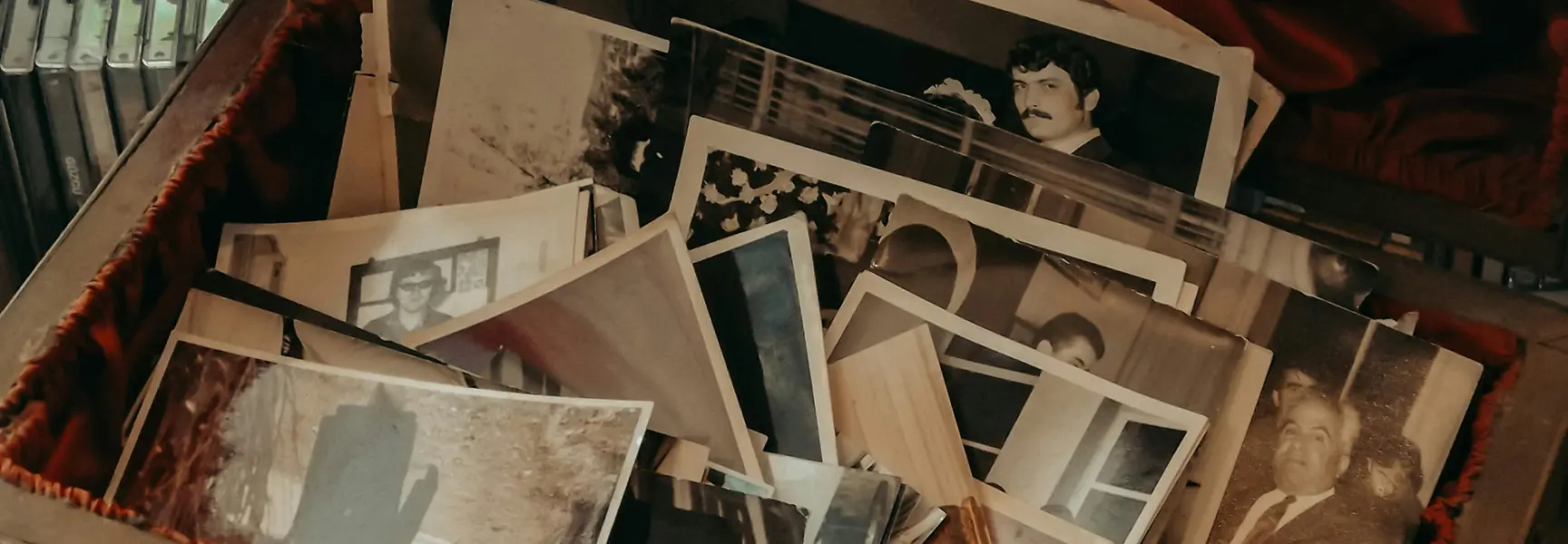
Most people already know they should be recording their parents' or grandparents' stories.
The problem usually isn't motivation. It's that it somehow never becomes the right time to start.
Life gets busy. Weeks turn into years. You assume there will eventually be a quieter season where you'll finally sit down, ask the important questions, and record everything properly.
But for a lot of families, that day never really comes.
What makes this strange is that we document almost everything else now. Most people have thousands of photos on their phone and countless short videos from birthdays, vacations, and random moments throughout the year.
But very few people have recordings of the stories that actually become priceless later on.
The story about how your parents met. What your grandfather's childhood was like. The details behind old family photos. The way someone laughs halfway through telling a story they've told for decades.
That's the part people miss.
Family recordings are not really about creating a perfect archive of someone's life. They're about preserving personality. Voice. Mannerisms. The small things that disappear much faster than people expect.
The good news is that this no longer has to become some massive family history project that feels overwhelming to start.
Modern tools like Reminiscely have made it surprisingly easy to capture stories naturally, a little at a time, without turning the process into work.
In this guide, we'll cover why family recordings matter, why so many people never actually follow through, and the easiest ways to start capturing stories while you still can.
Why Family Recordings Matter More Than Most People Realize
A lot of people don't fully understand the value of this until they've already lost someone.
It usually happens during a very ordinary moment. You hear an old voicemail. You come across a short video clip buried in your camera roll. And suddenly you realize how much someone's voice matters once you can't hear it anymore.
Photos preserve what someone looked like.
Stories preserve who they were.
The way they described things. Their sense of humor. The details they always included. The parts of family history that only existed in their head.
And unlike photos, these stories are surprisingly easy to lose forever if nobody records them.
That's why even short recordings become incredibly meaningful over time. A ten-minute conversation about someone's first apartment or first job may not feel important today. Twenty years from now, it becomes irreplaceable.
This is also one of the reasons family storytelling matters so much across generations. Kids and grandkids don't just inherit photos and names. They inherit context. Personality. A clearer sense of where they came from.
The goal is not just preserving information. It's preserving the feeling of a person while they're still here to tell their stories themselves.
Why Most Families Never Actually Do This
Almost everyone says some version of:
"I really need to sit down and record these stories someday."
But "someday" tends to keep moving.
Part of the issue is that people accidentally turn this into a much bigger project in their mind than it needs to be. They imagine formal interviews, expensive equipment, perfectly organized questions, or hours-long recording sessions.
So instead of feeling simple, it starts feeling like work.
There's also an emotional side to it. Recording a parent or grandparent can quietly force people to acknowledge that time is passing. Even when nobody says it out loud, that's often part of the hesitation.
And then there's the practical reality that most adults are already stretched thin. Careers, kids, responsibilities, aging parents. Anything that feels complicated tends to get pushed lower on the list.
That's why the best approach is usually the simplest one.
Not a giant production. Not a perfect memoir.
Just small conversations recorded consistently over time.
The process works much better when storytelling feels natural instead of overwhelming.
What Actually Works Best
The families who successfully preserve stories long term usually do something very simple:
They stop trying to do everything at once.
Instead of sitting someone down for a three-hour interview, they capture small moments naturally over time. A short story during dinner. A memory that comes up during a car ride. A conversation after looking through old photos.
Those shorter recordings are often better anyway because people stay relaxed.
And honestly, the technical side matters far less than most people think it does.
You do not need professional cameras or studio microphones. A phone is more than enough for most families. What matters is preserving the stories themselves.
Video tends to work especially well because it captures the small things audio cannot. Facial expressions. Body language. The way someone lights up while remembering something funny.
That's one reason video-first storytelling has become such a meaningful part of platforms like Reminiscely. Video preserves much more than facts. It preserves presence.
At the same time, some people are much more comfortable with audio-only recordings or written stories. That's completely fine too. The best format is simply the one your family will actually stick with.
The Easiest Way to Start This Week
The mistake most people make is overplanning.
A much better approach is to start with one simple conversation this week.
Not a life story interview. Just one story.
Ask something specific:
- What was your first job like?
- What do you remember about your childhood home?
- How did you meet mom?
- What were holidays like growing up?
- What was life like when you were in your twenties?
Specific questions almost always work better than broad ones like:
"Tell me about your life."
And don't worry too much about making the conversation perfect. Some of the best recordings feel casual and slightly unstructured. That's part of what makes them real.
The important part is simply starting while you still can.
What Actually Makes Family Recordings Easier Today
One reason more families are finally starting to do this is that the process has become dramatically simpler over the last few years.
In the past, recording family stories often felt like a major project. You either needed to set up a camera manually, organize audio files yourself, or hand someone a long written questionnaire that felt more like homework than a conversation.
That friction is usually what stopped people.
Now, family storytelling apps like Reminiscely make the process feel much more natural. Instead of trying to record an entire life story at once, families can capture small stories over time through guided prompts, casual video recordings, or written memories.
That "little by little" approach tends to work much better in real life.
A ten-minute story about someone's first apartment or first job is far easier to record than asking a parent or grandparent to somehow summarize their entire life in one sitting.
Video has also become much more important in this space.
Written stories are incredibly valuable, but video preserves the things people often miss later: someone's expressions, the way they laugh during a story, the pauses, the small personality traits that don't fully come through in text alone.
At the same time, not everyone is comfortable speaking on camera right away. That flexibility matters too. Some people prefer recording video first and letting the platform automatically create a written version afterward. Others are more comfortable writing first.
That's one of the reasons Reminiscely works well for many families. It doesn't force everyone into a single storytelling style. Some people naturally open up more through conversation. Others prefer taking their time and writing first.
The important thing is simply creating a process that feels easy enough to continue consistently.
Because in most families, consistency matters far more than perfection.
Start Preserving Your Family's Stories
Want to make recording these stories easier than scrolling through old photos? Check out Reminiscely.